
Skip to content

News, with the whole picture.

Get the gist. See what changed. Follow the story.

i

Machine voice. Your device's own speech engine reads Wikipedia's In the news word for word, then where each comes from. Nothing is sent anywhere.

Just in

From the publishers' own feeds: stories two or more outlets carry, newest first

Grouped by a printed rule DERIVED

Each headline is the outlet's own, linked to it; Browse writes none of them. The feeds are read every ten minutes at most, so a story here can be minutes old and not yet checked by anyone. A headline joins a story when it shares three or more words of four letters or more (names, places, things; common words set aside) with the story's first headline and was published within 48 hours of it. Unless four or more are shared, the shared words must include a name, or two words that stand side by side in both. A name is a word both headlines capitalise that the read's headlines mostly write with a capital away from their first word (Title Case headlines aside), carried by no more than one in a hundred of the stories (or six, when that is more); two capitalised words side by side in both, such as White House, are one name and count as one word. An everyday word counts half: one most headlines write in lower case that more than one in a hundred of the stories carry (and at least ten); it counts whole once the two share a name. Stories are counted once the headlines are grouped with every word whole. A headline joins the story it shares most with, and starts a new one when none matches. Then two stories of two or more headlines each, their first headlines within 48 hours of each other, become one when the words they share count three the same way (a word is shared when two or more headlines of one story, or one in five of a big story's, and one of the other's carry it); they share a name, or a pair of words side by side with a name in it that two headlines of each carry and no more stories than a name does; two of the shared words or pairs are as rare and are carried by enough headlines of both stories, or one when four or more words are shared; and the earlier first headline carries two of the shared words, one of them rare. The bigger story takes the smaller. A story's heading is its first headline, in that outlet's own words. Outlets are counted once each; a headline repeated word for word by several outlets is counted as one headline.

Reading the publishers' feeds…

Your catch-up deck

Start with a story. Go as deep as you like.

The stories that moved most recently

The deck leads with the stories the most sources carried in the last day. Each registered publisher whose own feed has a headline on the story in the last 24 hours counts one; Wikipedia's editors count one when they added a line under it on today's or yesterday's Current events page, and one more when they posted it to In the news in the last 24 hours. A publishers' story joins a Wikipedia story when its first headline shares two or more long words with the story's name, a name of several words counting once. Ties go to the story that moved most recently, then to the one with more lines. Two stories on one event show once: a story whose name shares two or more long words with a story above it (by the same rule, a year not counting, nor a word one name writes as a name and the other as a common word) folds into that story, which says how many more outlets the folded one adds. A shared picture alone does not fold a story, since one file photo can picture several events. A story no source moved in that time leaves the deck, unless fewer than three moved. The counts are Browse's (DERIVED).

1 / 5

Keep exploring

Wider view beyond the lead story: what else Wikipedia's editors list.

Story paths

2 connections between today's stories, through a shared topic or section.

Explore connections
Original records

Latest, from every source

The outlets' and open newsrooms' newest headlines by their own times, beside the newest lines Wikipedia's editors listed.

From Wikipedia's editors

2026 drone incidents in Romania

A merchant ship is hit by drones of unknown origins in Romania's Black Sea water, killing a crew member and leaving three more missing. Nine people are rescued.

Open

2026 West Bank lockdown

The Israeli government orders the military to prepare for a complete lockdown of the West Bank. This comes after two men who allegedly planned an attack are killed.

Open

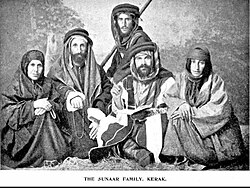
2026 Karak church shooting

Seven people are killed and 34 others are wounded in a mass shooting during a funeral procession at a Greek Orthodox Church in Hamoud, Karak Governorate, Jordan. Both the gunmen escape from the scene.

Open

2026 Strait of Hormuz crisis

Iran's Islamic Revolutionary Guard Corps reports that seven oil tankers have been hit in the Strait of Hormuz.

Open

Explore the coverage

The outlets that carry the lead story, in their own feeds and their own words.

How the outlets are grouped

Each outlet is named as its own feed names itself, linked to its article. Headlines join one story by a printed rule (shared words within 48 hours), counted by Browse (DERIVED). Several outlets covering one thing shows attention, not independent confirmation.

You've reached the end of this brief.

The stories the most sources carried today, from the publishers' own feeds and Wikipedia's editors. Keep exploring, or come back for what changes.

View saved stories
Sources & methods
  • The deck. The deck leads with the stories the most sources carried in the last day. Each registered publisher whose own feed has a headline on the story in the last 24 hours counts one; Wikipedia's editors count one when they added a line under it on today's or yesterday's Current events page, and one more when they posted it to In the news in the last 24 hours. A publishers' story joins a Wikipedia story when its first headline shares two or more long words with the story's name, a name of several words counting once. Ties go to the story that moved most recently, then to the one with more lines. Two stories on one event show once: a story whose name shares two or more long words with a story above it (by the same rule, a year not counting, nor a word one name writes as a name and the other as a common word) folds into that story, which says how many more outlets the folded one adds. A shared picture alone does not fold a story, since one file photo can picture several events. A story no source moved in that time leaves the deck, unless fewer than three moved. The counts are Browse's (DERIVED). Just in, above it, shows the stories two or more registered publishers' own feeds carry from the last six hours, each headed by its earliest outlet's own headline. Browse writes no headline and no summary, and ranks nothing by its own judgement.
  • The feed is every Current events line, one row per story, newest date first; older days are under the date control, back to 2005.
  • What changed is the newest Current events line under the story, with its date; Posted is the time the item first appears in the In the news section's edit history.
  • Sources, on a story, names the outlets Wikipedia's editors cite for its lines: not every outlet that covered it, and several outlets covering something shows attention, not independent confirmation.
  • Who says it. A cited outlet marked OFFICIAL is a government, court or agency's own record; OWN SITE or OWN ACCOUNT, a party the line names speaking for itself; a platform's name, a social post; no mark, a report by that outlet. Read from the address, never judged.
  • Pictures are free files (public domain, CC0, CC BY, CC BY-SA) that the story's own Wikipedia article shows, chosen in this order: a photo taken during the event, a file photo of a person, place or thing in it, a satellite image; a map is shown only whole, in the coverage. Flags, emblems, logos and charts are never used, and a story with no suitable picture has none. Each is labelled with what it is and credited, its caption is Wikipedia's, and it is served from browse.info so your browser contacts no other site.
  • Coverage is the public feeds of 69 publishers (who, and what each outlet's terms say), read the way a feed reader does, every ten minutes at most, by a reader that names itself and stops where robots.txt says so; of each item the link, the headline as the outlet wrote it, the time, the author and the categories are kept, never the text or a picture. Headlines are grouped by one printed rule, labelled DERIVED, each story headed by its earliest outlet's own words; Browse writes no headline and counts outlets once. An outlet that asks is removed within 48 hours.
  • Newsrooms are the headlines, authors and times of Voice of America (public domain), Global Voices (CC BY 3.0), The Conversation (CC BY-ND 4.0), ProPublica (CC BY-NC-ND 4.0), UN News (its terms) and Inside Climate News (CC BY-NC-ND 3.0), the last three a non-commercial use, which Browse is; each linked to the original, none of its text copied. Headlines are the pages the GDELT Project's crawlers read in their newest quarter-hour, in English or in 65 other languages when you pick one, by the page's own title and time and GDELT's name for the site, found through GDELT under its terms (unrestricted use, cited and linked), none of the text. Records are the White House's, the Federal Register's, the European Commission's, the UK Government's and the European Central Bank's own publications, with their own identifiers, and companies' own current reports as the SEC's EDGAR lists them.
  • Everything is read once for everyone every few minutes; NEW, what you follow, mute and save, and the reading density are kept on this device.
  • Mute an outlet or a site from a coverage list, the headline board or the newsrooms: it never appears again on this device, and a line it alone cites is hidden and counted. Near your places on the board keeps the pages whose places name a place you follow.
  • Not here: any outlet's article text or summary, publishers' pictures, and publishers outside the register at /news/publishers.

Wikipedia, In the news · revision 1381522980 · CC BY-SA 4.0