
REFERENCE Wikipedia, read on Browse · 3 min read
Blue Nile State
State of Sudan
Blue Nile State (Arabic: ولاية النيل الأزرق Wilāyat an-Nīl al-ʾAzraq) is one of the 18 states of the Republic of the Sudan. Established by Presidential Decree No. 3 in 1992, it is named after the Blue Nile River. The region is host to around forty different ethnic groups. Its economic activity is based on agriculture and livestock as well as mineral exploitation. It borders Ethiopia to the east, South Sudan to the west, and Sennar to the north.
History
In 2011, residents of Blue Nile were scheduled to hold ill-defined "popular consultations" to determine the constitutional future of the state, per the Comprehensive Peace Agreement. Instead, a dispute over the rightful government of the state, and the determination of Omar al-Bashir to eradicate the Sudan People's Liberation Movement–North, led to a renewed nine-year conflict between government forces and the Sudan Revolutionary Front as well as contributing to a refugee crisis. The conflict finally came to an end in 2020 after a peace agreement was signed and the government to not discriminate based on ethnicity or religion.
Further clashes in the state broke out in 2022 between the Hausa people and Funj and Berta peoples over land disputes which led to the deaths of hundreds of civilians. On 5 August 2024, the RSF launched an incursion into the state and continues to control northwestern parts of the state. On 5 March 2025, SAF launched a counteroffensive on the rest of RSF controlled territory in Sennar, and took full control over territories, including Mazmoum.
In 2026, conflict renewed as the RSF and SPLM-N launched an offensive from the Ethiopian border, capturing Kurmuk and the southern areas of the state.
Administration
The State is sub-divided into five districts (with 2006 Census populations shown hereafter):
Ad Damazin District (212,712)
Al Roseires District (215,857)
Geissan District (87,809)
Baw District (127,251)
Al Kurumik District (110,815)
State Governors
Feb 1994 – Dec 1997 : Abdalla Abu-Fatma Abdalla
Dec 1997 – Jan 2000 : Abd ar-Rahman Abu Madyan
Jan 2000 – Feb 2001 : Al-Hadi Bashra
Feb 2001 – 2003 : Hassan Hamadayn Suleiman (1st time)
2003 – 2004?: Abdallah Uthman al-Haj
2004 – 2005: Hassan Hamadayn Suleiman (2nd time)
Sep 2005 – Jul 2007 : Abdel Rahman Mohamed Abu Madien
Jul 2007 – 20 Sep 2011 : Malik Agar Eyre
Sep 2011 – Apr 2013 : Yahya Mohamed Khair (1st time)
1 Apr 2013 – May 2018 : Hussein Yassin Hamad
14 May 2018 – Feb 2019 : Khalid Hussein Mohamed Omer
24 Feb 2019 – Apr 2019 : Yahya Mohamed Khair (2nd time)
Apr 2019 - 2020 : Ahmed Abdul-Rahim Shukratall
22 Jul 2020 - 27 Dec 2020 : Abdul Rahman Mohammed Nour al-Daiem
Dec 2020 - 13 Jun 2021 : Jamal Abdel Hadi
13 Jun 2021 - Incumbent : Ahmed al-Omda
Geography
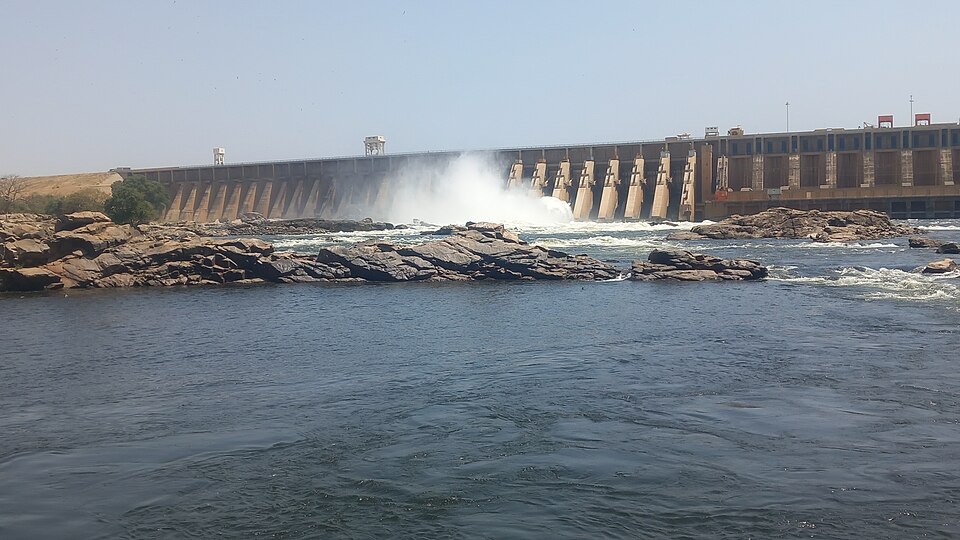
Blue Nile state has an area of 45,844 km2 and an estimated population of 1,193,293. The Central Bureau of Statistics quoted the population at 832,112 in the 2006 census. Ad-Damazin is the capital of the state. The state of Blue Nile is home to the Roseires Dam, the main source of hydroelectric power in Sudan until the completion of the Merowe Dam in 2010.
Settlements
Ad-Damazin
Baldago
Bashir Nuqu
Deim Mansour
Er Roseires
Khor al-Budi
Kurmuk
Qaysān, Abdullah Qeissan
Qaysān, Qēssan
Wad el-Mahi
Languages
The following languages are spoken in Blue Nile state according to Ethnologue.
Berta language
Gumuz language
Hausa language
Eastern Jebel languages
Gaam language
Aka language
Kelo language
Molo language
Nilotic languages
Burun language
Jumjum language (speakers based in South Sudan)
Omotic languages
Ganza language
Koman languages
Komo language
Gule language
Uduk language
Other languages
Fulfulde language
Songhay language