
REFERENCE Wikipedia, read on Browse · 3 min read
László Sáry
Hungarian composer, pianist and music educator (1940–2026)
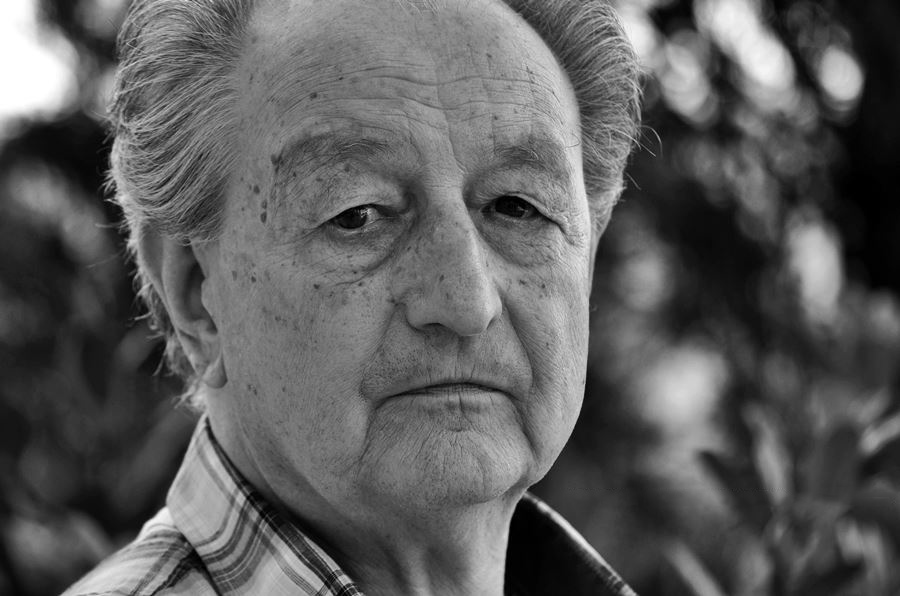
László Sáry (1 January 1940 – 14 November 2026) was a Hungarian composer, pianist and music educator. He was a founding member of Új Zenei Stúdió (Budapest New Music Studio) and developed the Creative Music Practice pedagogical method.
Life and career
Early life and education
László Sáry was born in Győr on 1 January 1940, and grew up in a railway service apartment in a village near Pannonhalma, where his father worked as a stationmaster. From 1961 to 1966, he studied composition under Endre Szervánszky at the Franz Liszt Academy of Music in Budapest.
Budapest New Music Studio and compositional style
Sáry's early works drew on the style of Béla Bartók, before shifting toward the techniques of Pierre Boulez and Karlheinz Stockhausen. In 1970, at the initiative of Albert Simon, Sáry co-founded Új Zenei Stúdió (Budapest New Music Studio) with Zoltán Jeney, László Vidovszky, Péter Eötvös, and Zoltán Kocsis. Between 1972 and 1990, the ensemble premiered over 600 contemporary works in Hungary and abroad, with Sáry participating as both composer and performer. His work with the studio included group improvisation and collective compositions, such as Pentagram (1982).
In 1972, Sáry attended the Darmstadt Summer Courses, where he met American composer Christian Wolff and studied scores by Wolff, John Cage, Earle Brown, and Steve Reich. Following this visit, he composed Sounds for... (Hangok, 1972), moving away from traditional European harmonic and structural conventions. During the 1970s and 1980s, his compositions frequently used repetitive patterns, chordal sequences (A Continuity of Rotative Chords, 1982), scale groupings (Ludus Cromaticus, 1987), and pitch permutations (Fives Repeated, 1985, constructed from 120 permutations of five pitches). Working with electronics and musique concrète, he composed the tape piece Studies for Steam Engines (Etűdök gőzmozdonyokra, 1996), which placed third at the seventh International Rostrum of Electroacoustic Music in Vienna in 1998.
Pedagogy and theatre
In the mid-1970s, Sáry began developing a pedagogical system titled Creative Music Practice (Kreatív zenei gyakorlatok, also referred to as the "Sáry Method"), consisting of exercises focused on improvisation, concentration, and ensemble listening. He published the methodology as a book in 1999. Sáry taught these exercises to music school students and at the University of Theatre and Film Arts in Budapest, and conducted workshops for music teachers in Japan, the United Kingdom, France, Italy, Belgium, and Estonia. Starting in 1994, he participated in Yehudi Menuhin's MUSE educational program for disadvantaged children.
From the early 1980s, Sáry composed incidental music for theatre and film. In 1990, he became the musical director of the József Katona Theatre in Budapest. In 1996, he spent three months in Tokyo on a Japan Foundation fellowship studying traditional Japanese theater, dance, and music. In 2002, his film score received the Best Music award from the Kecskemét Animation Film Festival jury.
Personal life
Sáry's brother was composer József Sári. His son was Bánk Sáry
Sáry died on 14 November 2026, at the age of 86.
Compositions
Sáry's compositions include:
Stage and vocal
I. Kantáta (1968)
Hold-ének (1982)
Adorjánok és Jenők, opera (1994)
Theomachia, oratorio drama (2002)
Négerek, opera (2004)
Ének a kőszívű királyról, chamber opera (2006)
Finnugor oratórium (2016)
Orchestral and ensemble
Canzone solenne for symphony orchestra (1970)
Musica per 24 archi e 24 fiati (1977)
Concerto Classico for chamber orchestra (1980)
Hüperion sorsdala (Hyperion's Song of Destiny) for string orchestra (1986)
Concerto obligát szaxofonokra (1993)
Chamber, solo, and electroacoustic
Sounds for... (Hangok), for unspecified instruments (1972)
Kotyogó kő egy korsóban (Pebble rattling in a pot) (1978)
Pentagramm (1982)
Egy akkordsor forgatókönyve (A Continuity of Rotative Chords) (1982)
Ismétlődő ötös (Fives Repeated) (1985)
Ludus Cromaticus (1987)
Tánczene (Dance Music) (1989–2000)
Etűdök gőzmozdonyokra (Studies for Steam Engines), tape (1996)
Locomotive Symphony, tape (1997)
Books
Kreatív zenei gyakorlatok (Creative Music Activities), Jelenkor Kiadó (1999)
Honours and awards
1979 – Kassák Award
1986 – Ferenc Erkel Prize
1993 – Bartók–Pásztory Award
1998 – 3rd Prize, Seventh International Rostrum of Electroacoustic Music (Vienna)
1999 – Elected full member of the Széchenyi Academy of Letters and Arts
2000 – Merited Artist of Hungary
2008 – Excellent Artist of Hungary
2016 – Artisjus Award for classical composition of the year