
REFERENCE Wikipedia, read on Browse · 4 min read
Cyclone Arnab
North Indian Ocean cyclone in 2026
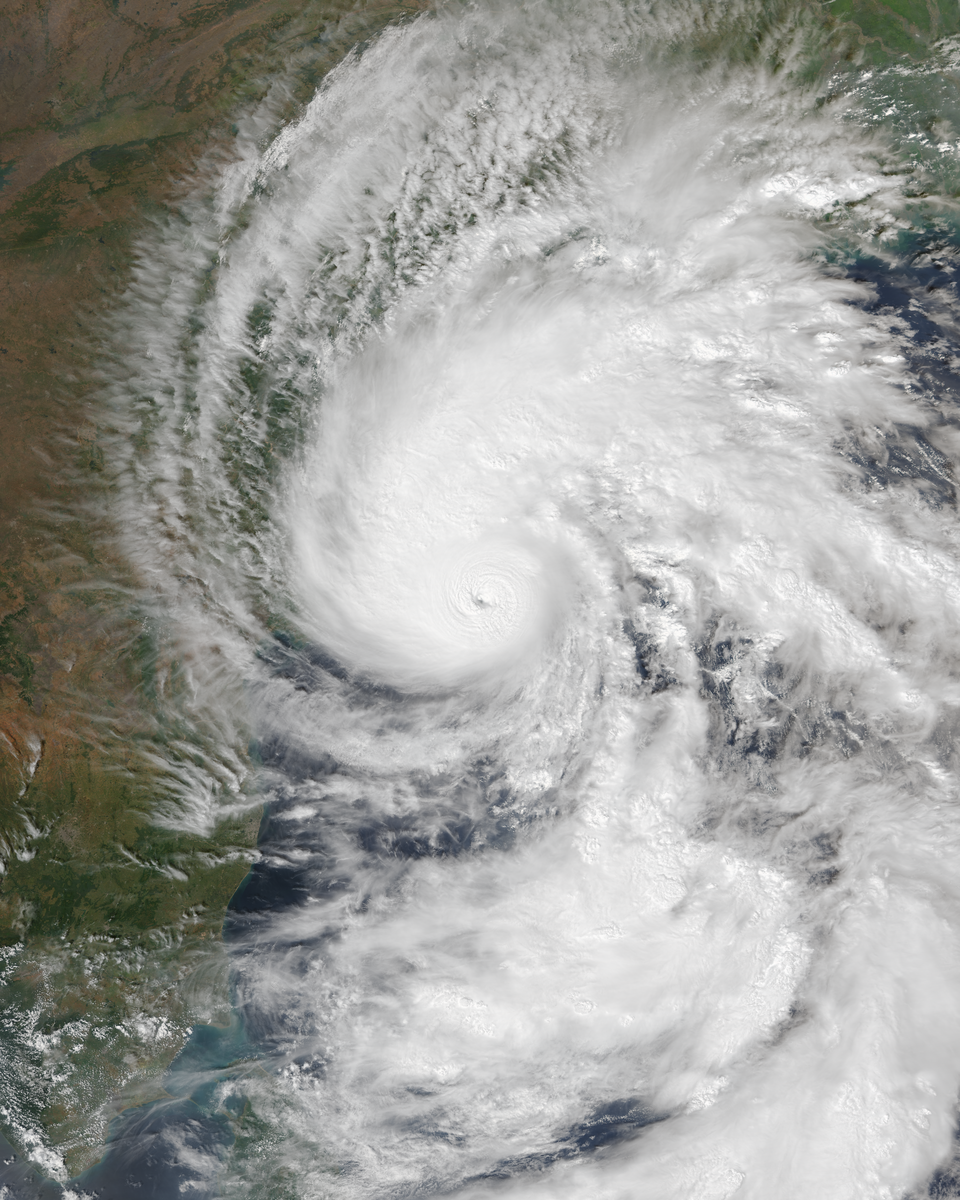
Cyclone Arnab is a currently active cyclone in the Bay of Bengal threatening South and East India. It is the eighth depression and the first cyclone of the 2026 North Indian Ocean cyclone season.
The system originated as a low-pressure area in the eastern Bay of Bengal where it meandered for several days before strengthening into the Cyclonic storm Arnab. It made landfall as a Very Severe Cyclonic storm on 28 October near Narasapuram, battering Coastal Andhra and Odisha and uprooting hundreds of trees across the region. Northern districts of Andhra Pradesh suffered the worst damage, with over 80,000 hectares of crops lost, 180 houses damaged, and three people killed. Storm surge affected the northern coast of Tamil Nadu.
Meteorological history
On 20 October, the India Meteorological Department (IMD) began to monitor the Bay of Bengal for a low-pressure area that was likely to develop within 24 hours. Three days later, a low-pressure area formed over the eastcentral–southcentral Bay of Bengal under the influence of an upper-level cyclonic circulation. Favourable conditions prevailed over the central Bay of Bengal, with the Madden–Julian oscillation enhancing thunderstorm activity. Sea surface temperatures were 30 °C (86 °F), while wind shear was moderate. By 12:00 UTC on 24 October, the well-marked low pressure area concentrated into a depression over the central Bay of Bengal. The system, marked Invest 98B by the United States Navy's Joint Typhoon Warning Center (JTWC), consisted of a partially exposed but consolidating low-level circulation and developing banding features to the south and east of the depression’s vicinity as a TCFA was issued at 11:00 UTC. On 25 October at 09:30 UTC, the IMD reported that the system intensified to a deep depression. The next day, the system strengthened into a cyclonic storm and was assigned the name Arnab. 12 hours later, Arnab intensified into a severe cyclonic storm. Six hours later, Arnab intensified into a very severe cyclonic storm.
The very severe cyclonic storm crossed the Andhra Pradesh coast southwest of Yanam, near latitude 16.450 N and longitude 81.90 E, about 20 km east-northeast of Narasapuram, 40 km southwest of Yanam and 60 km southwest of Kakinada, between 27 October 20:30 and 28 October 02:30 UTC, before weakening into a severe cyclonic storm.
Preparations
Andhra Pradesh
The IMD declared red alerts in seven districts in Andhra Pradesh on 26 October. 15 teams from the National Disaster Response Force (NDRF) were mobilised in Andhra Pradesh while ₹27 crore in relief was released by the state. Schools in 10 districts were closed. By 27 October, at least 89,000 people were evacuated in Andhra Pradesh.
Andhra Pradesh called on boats to return from sea and identified 570,000 people as vulnerable in preparation for evacuations. By 26 October, Andhra Pradesh officials stated that over 30,000 fishing boats had returned to harbour. The Chintoor Integrated Tribal Development Officer directed the suspension of tourism boat operations to the Papikonda hills in Godavari Valley. Rail service on 53 routes in southern India were suspended on 27–28 October, including the Godavari Express, Gowthami Express, Visakha Express, Falaknuma Express, Narasapur Express, and the Garib Rath Express. 21 flights were cancelled at Vijayawada Airport and Visakhapatnam Airport, with cancellations also occurring at Gannavaram Airport.
Odisha
The government of Odisha declared that over 1,700 shelters were prepared in the state's southern districts. Eight NDRF teams and 40 Odisha Disaster Rapid Action Force teams were mobilised. The closure of schools and colleges in five districts was announced for 28–29 October.
Elsewhere
The Government of Jharkhand ordered schools in Ranchi, Simdega, East Singhbhum and West Singhbum closed til 29 October as a precaution against heavy rainfall.
Impact
Arnab battered the eastern coast of India, resulting in both life and property loss.
Andhra Pradesh
As Arnab approached landfall, several locations of Coastal Andhra recorded heavy rainfall exceeding 200 mm, while strong winds uprooted trees and power poles, blocked roads and disrupted electricity supply. The sea surged to 1–1.5 metres near the landfall zone. According to the Chief Minister of Andhra Pradesh, 57,000 people were moved to relief camps, 70,900 hectares of paddy and 10,450 hectares of horticultural cropes were ruined, and 180 houses damaged.
Two people died in separate electrocution incidents: a 53-year-old man died in Visakhapatnam district on 27 October after coming into contact with a snapped live wire in an agricultural field channel; a 55-year-old woman died on 28 October in Anakapalli district after stepping on an exposed live wire outside hundred house. Another person was killed by a falling tree in Bhimavaram, West Godavari district.
In Kakinada district, hundreds of trees and fewer than hundred electric poles were uprooted, and the entirety of the Uppada coastal road had succumbed to the sea. In Alluri district, an old bridge was washed away, isolating a village. 400 trees were uprooted in Vishakhapatnam district. Flight operations at Vishakhapatnam's INS Dega airport was suspended since the afternoon of 27 October, while flights at Vijayawada and Rajahmundry were suspended after 00:30 UTC on 28 October. In Konaseema district, gusty winds reached up to 130 kmph. A cargo ship carrying sulphur ran aground in the sea near Antarvedi village due to engine failure.
Odisha
In Odisha, a tree fell on a house and caused a brick wall to collapse, killing a 40-year-old woman in Puri.
Tamil Nadu
Persistent rainfall in the Nilgiris district in Tamil Nadu caused as many as 69 landslips on 25 and 26 October, damaging power lines, revetments, and 16 huts. On October 27, the northern coast of Tamil Nadu began experiencing rough seas and storm surge, with alerts issued to the Greater Chennai Corporation, and the districts of Tiruvallur, Chengalpattu, Vilupuram, and Cuddalore. In North Chennai, rapidly advancing waves overtopped the shoreline rock embankment and spilled onto the Ennore Expressway; police temporarily closed the road and diverted the traffic. Seashore residents of Ennore, Tiruvottiyur and Mamallapuram were evacuated to safer areas.